 Porchlight Tales
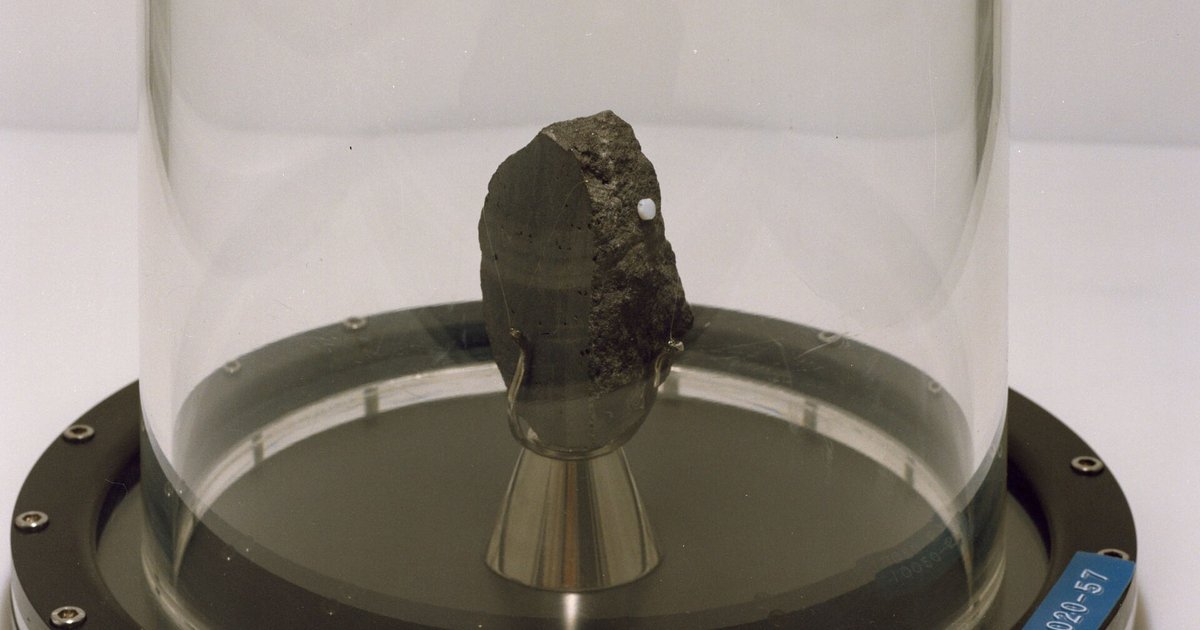
What If Apollo 11 Found Microbial Life on the Moon?
Speculative fiction · Alternate history. Characters, documents and events in this story are imagined; real people, places and institutions appear only as historical backdrop.
Full story · 6 chapters · Read in 3 parts instead
Listen to this story (3 parts)
Part 1 · 3 min
Part 2 · 3 min
Part 3 · 3 min
Chapter 1
Dr. Elena Vasquez had been eleven years old when her father, a contamination-control engineer at the Lunar Receiving Laboratory, came home three days after the Apollo 11 splashdown and didn't speak at dinner. She remembered it only because it was so unlike him. Fifty-five years later, sitting in a records office in Houston with a newly declassified folder in front of her, she finally understood why.
The folder contained a contamination report dated July 26, 1969 — four days after the astronauts returned — describing an anomalous reading in Sample 10084, one of the first lunar soil canisters opened under quarantine. A biologist named Dr. Harlan Reyes had flagged a chemical signature in the sample consistent with metabolic byproducts: not proof of life, his report was careful to say, but not easily explained by any known abiotic lunar process either.
What happened next was not, Elena would discover over the following months of archival work, a cover-up in the dramatic sense the word implied. It was something more bureaucratically ordinary and, in its own way, more unsettling: a program genuinely unprepared, in the summer of 1969, to handle a result its own protocols had only theoretically anticipated, and a decision, made by committee over six tense days, to verify quietly before saying anything to a public still celebrating the giant leap.
Chapter 2
The verification took considerably longer than six days. A second canister, opened under even stricter containment in August, showed the same anomalous signature — weaker, but present, and this time accompanied by something harder to dismiss: a trace structure under electron microscopy that Reyes's team could not conclusively identify as biological, but could not rule out either.
NASA's public statement, released in October 1969 after three months of internal argument, was a masterpiece of careful ambiguity that read, to most newspapers, as scientific caution rather than concealment: lunar samples showed "chemical anomalies consistent with several possible explanations, including but not limited to biological processes, which further missions will investigate." Most of the public heard "not limited to biological processes" and moved on. The scientific community did not move on at all.
What followed was not a single dramatic funding windfall but something stranger: a quiet, sustained redirection of exobiology research that would otherwise have waited decades for a comparable trigger. A young microbiologist named Dr. Sarah Chen, reading the October statement in a university library, abandoned her planned dissertation on soil bacteria and wrote, instead, a grant proposal for lunar sample analysis methods — a field that, in the history Elena had grown up believing, would not meaningfully exist until the 2020s.
Chapter 3
By 1973, three additional Apollo missions had returned with specific instructions to collect samples from subsurface regolith, protected from solar radiation, rather than surface material alone — a mission priority shift that quietly consumed budget NASA's public affairs office described only as "enhanced sample diversity objectives." Dr. Reyes, by then heading a permanently expanded exobiology division, kept a private journal that Elena found folded into the back of the declassified folder, apparently filed by accident decades later by an archivist who hadn't realized what it was.
"We still do not know if it is alive," he wrote in March 1973, "or if it was ever alive, in any sense a biologist would recognize. We know only that something in that soil does not behave the way sterile rock should behave, and that not knowing has proven a far more effective argument for sustained funding than knowing cleanly ever would have been."
That line, more than any press release, captured what Elena came to understand as the real shape of this history: not a triumphant discovery announced to a cheering world, but five decades of patient, underfunded-by-comparison, politically delicate research conducted in the shadow of a result too ambiguous to make headlines and too significant to ignore.
Chapter 4
The ambiguity itself became, by the 1980s, a kind of institutional asset. When NASA's budget faced brutal cuts under a Congress eager to redirect Cold War-era space spending, the exobiology division survived two rounds of cuts that eliminated programs with far clearer, far more celebrated results, because no administrator wanted to be the one who closed the lab investigating whether humanity had found, and then quietly shelved, evidence of life beyond Earth.
A Soviet counterpart program, running parallel analysis on Luna sample return missions through the 1970s, reported its own ambiguous findings in 1981 — never conclusively linked to the American results, but similar enough that a joint Soviet-American research exchange, improbable at the height of Cold War tension, received quiet approval from both governments specifically because neither wanted the other monopolizing an answer this significant.
Dr. Chen, by then a senior researcher leading the joint program's American delegation, wrote in a 1983 progress report that the collaboration had become "the strangest diplomatic success of my career, built entirely on both sides' shared discomfort with not knowing something this large alone." She did not yet know that the actual answer — alive, once-alive, or never alive at all — remained exactly as unresolved as it had been in 1969, and would stay that way for another two decades.
Chapter 5
Resolution, when it finally came in 2004, arrived through a method no one in 1969 could have anticipated: a robotic sample-return mission equipped with gene-sequencing technology that would have sounded like science fiction to Harlan Reyes, by then eighty-one years old and present, in a wheelchair, at the press conference where the results were announced.
The structures were not alive, and had not been for a very long time — fossilized remnants, the sequencing team concluded, of an extremophile microorganism whose genetic markers bore no resemblance to anything terrestrial, embedded in lunar regolith that radiometric dating placed at roughly three point two billion years old, from a period when the Moon briefly held a thin atmosphere and liquid water pooled in shallow craters during a volcanically active era long since ended.
Reyes, asked by a reporter how it felt to have his 1969 hunch validated thirty-five years later, gave an answer that Elena found quoted in six different newspaper archives, always with slightly different phrasing, as though no transcript had ever quite agreed on his exact words. The version she trusted most, from a reporter who had recorded the press conference on tape, had him saying simply: "It feels like the patience was the discovery. The life was just the proof we needed before anyone would believe the patience had been worth having."
Chapter 6
The fifty-five years of research the ambiguous 1969 finding had quietly funded did not, in the end, produce a single triumphant headline so much as an entire scientific infrastructure that would not otherwise have existed on anything like the same timeline: sample-return protocols refined across a dozen missions instead of two, an international collaborative framework built a generation before the political conditions would otherwise have allowed it, and an entire discipline of planetary microbiology that, in the history Elena had grown up believing, would not mature until the 2030s at the earliest.
Elena closed the folder in the Houston records office and thought, for a long moment, about her father at the dinner table in 1969, unable to speak about what he had watched Reyes's team uncover that week. He had died in 2011, seven years after the 2004 announcement, having spent his final working decades on contamination protocols for a program whose entire justification traced back to four days in July he had never been permitted to discuss outside a short list of cleared colleagues.
She wondered, writing her own report on the declassified file, whether the real discovery of 1969 was the fossil at all, or the fifty-five years of careful, underfunded, stubbornly sustained not-knowing that a single ambiguous reading had somehow been enough to justify.
The End