 Porchlight Tales
The Hundred-Dollar Napkin at Miller's Diner
Fiction. This is an original, made-up story: names, characters and events are invented, and any resemblance to real people or events is coincidental.
Full story · 6 chapters · Read in 3 parts instead
Listen to this story (3 parts)
Part 1 · 2 min
Part 2 · 2 min
Part 3 · 2 min
Chapter 1
The rain didn't just fall; it hammered against the windows of Miller's Diner, turning the world outside into a blurred wash of gray. I sat in the corner booth, the vinyl seat sticking to my thighs, staring at a plate of cold eggs and a stack of anatomy notes. My stomach groaned, a reminder that this was my last meal before my bank account hit zero.
I checked my phone again. $4.12. The bill for my breakfast was $12.50. I felt a hot prickle of shame climb up my neck as the waitress, a tired woman named Dot, approached with the check. I had spent my last few dollars on a bus pass to get to my clinicals, thinking I could find a way to cover this. Now, staring at that small slip of paper, I felt trapped in a booth that suddenly felt far too small.
Chapter 2
I tried to maintain a smile, but my voice shook. 'I'm so sorry, Dot. I... I think I misplaced my wallet.' It was a lie, a clumsy one, and Dot had seen too many nursing students on the brink to be fooled. She didn't scold me. Instead, she sighed, the scent of fried onions and old coffee clinging to her apron.
'Just leave your phone or your ID,' she whispered, glancing at her manager. 'I'll cover it for now, but you've got to come back and pay me by Friday.' I handed over my student ID with trembling fingers, feeling the weight of my failure. As I stood up to leave, I noticed him. A man in a faded olive-drab army jacket sat three booths down, his eyes fixed on me from under a worn baseball cap.
Chapter 3
He didn't say a word. He just watched with a gaze that felt like it was reading the fine print of my life. I hurried out into the rain, the cold wind whipping through my thin cardigan, my mind racing through a list of people I could possibly borrow ten dollars from without sounding desperate.
When I returned to the diner the next morning, drenched and exhausted from a twelve-hour shift, I headed straight for Dot. I had managed to scrape together the money by skipping lunch for two days. But when I reached the counter, Dot wasn't looking at me. She was holding a white paper napkin, her expression a mix of confusion and something that looked like awe. 'Someone left this for you,' she said, sliding the napkin across the laminate counter.
Chapter 4
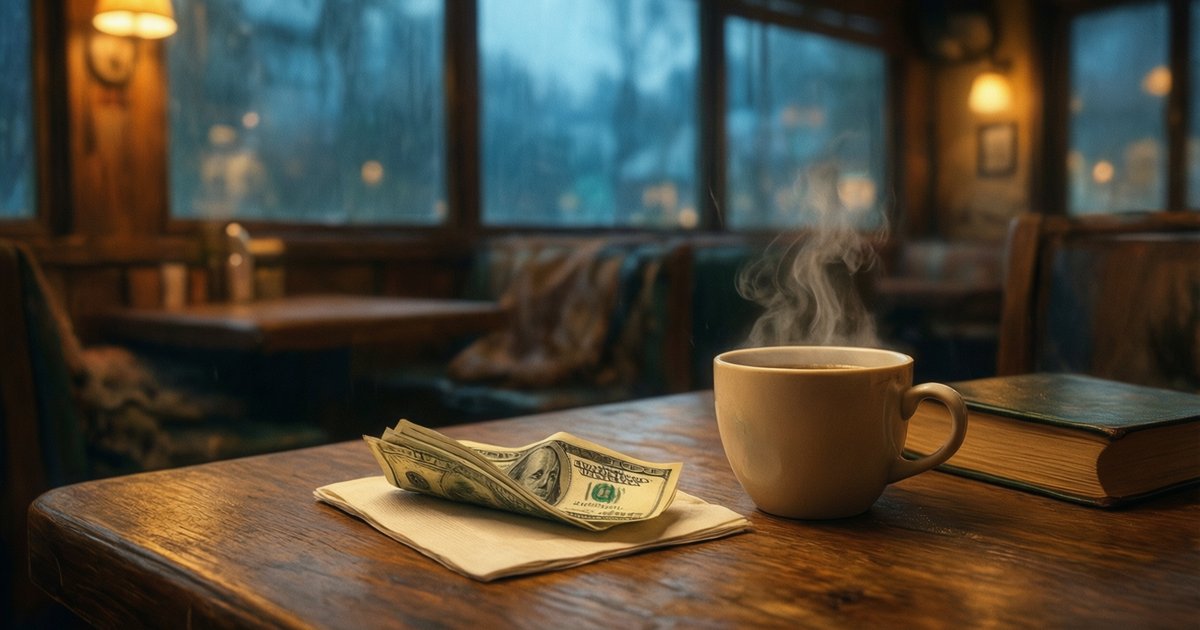
I unfolded the napkin. Tucked inside was a crisp hundred-dollar bill. On the paper, written in a shaky but firm hand, were four words: 'Keep going, Future Nurse.'
I looked around the diner, but the man in the army jacket was gone. There was no name, no request for repayment, just the scent of old tobacco and cedar clinging to the paper. That hundred dollars didn't just cover my breakfast; it paid for the textbooks I had been trying to photocopy in the library and bought me three weeks of groceries. For the first time in months, the tightening knot in my chest loosened. I felt seen, not as a charity case, but as someone worth investing in.
Chapter 5
The gesture haunted me in the best way possible. Every Tuesday for the next two years, I returned to Miller's Diner. I looked for the army jacket, the weathered cap, the quiet eyes. I wanted to tell him that I had passed my boards, that I was now working in the pediatric ward at St. Jude’s, and that his kindness had been the fuel that kept me from quitting during my darkest semester.
One rainy November morning, I saw him. He was sitting in the same corner booth, looking thinner, his jacket now frayed at the cuffs. He was staring at a cup of black coffee, his hands shaking slightly. He didn't recognize me—I had grown my hair out and lost the haunted look of a starving student—but I recognized the stillness in his shoulders.
Chapter 6
I didn't just buy his coffee. I sat down across from him and placed a white paper napkin on the table. Inside was an envelope containing a handwritten letter and a gift card to the best pharmacy in town for his medications, along with a small token of my success.
'I'm the student from the rain,' I whispered.
The man looked up, and a slow, genuine smile broke across his weathered face. He didn't need to say he had been a combat medic or that he had spent his pension helping strangers because he knew what it felt like to be broken. He simply squeezed my hand, his grip frail but warm. In that small, grease-scented diner, the circle finally closed, proving that a single act of grace never truly disappears—it just waits for the right moment to come home.
The End