 Porchlight Tales
The Third Ring of the Old Rotary Phone
Fiction. This is an original, made-up story: names, characters and events are invented, and any resemblance to real people or events is coincidental.
Part 1 of 5 · Chapters 1–2 of 10
Listen to Part 1 · 5 min
Chapter 1
The air at St. Jude’s Rest smelled of industrial lavender and old mahogany, a scent that failed to mask the underlying aroma of sterile decay. I had been a Licensed Practical Nurse for five years, but this was my first week in Oakhaven, Maine. The facility was a sprawling, Victorian-era relic draped in a constant gray mist that seemed to swallow the pine trees surrounding the property.
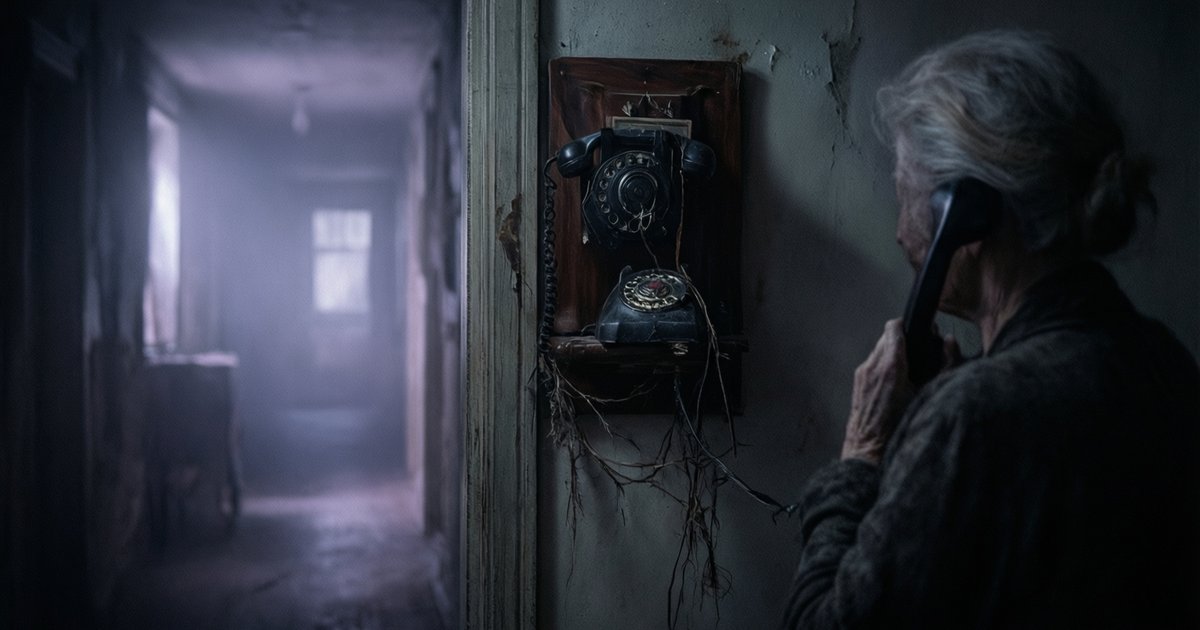
I spent my first few days adjusting to the rhythmic silence of the hallways, but on Thursday, the rhythm broke. It was exactly 6:15 PM. I was pushing a medication cart past the east wing when a sharp, metallic clang echoed through the corridor. It was a rotary phone, a heavy black piece of 1960s plastic mounted on a mahogany panel. The cord had been severed years ago, the frayed wires hanging like dead nerves against the wallpaper.
Then it happened. Ring. Ring. Ring. Three precise, jarring tolls.
Before I could even blink, the door to Room 212 swung open. Joyce Holloway, an 88-year-old woman with skin like crumpled parchment and eyes that held a terrifying clarity, stepped out. She didn't look surprised. She didn't look confused. With a tender, practiced motion, she lifted the receiver to her ear.
"I'm here, Leo," she whispered, her voice a fragile thread.
For a few minutes, Joyce stood perfectly still, listening to a silence that I knew was absolute. When she finally hung up and turned back to me, the smile she had worn vanished. In its place was a look of such profound, raw grief that I felt it in my own chest. It was the same expression I had seen in the mirror three years ago when I walked out of my father's hospital room for the last time, unable to say the things that mattered. I knew that look. It was the weight of a conversation that never truly ended.
Chapter 2
The next morning, I couldn't shake the image of Joyce's face. My habit of trying to fix things—broken faucets, fractured relationships, failing patients—kicked in. I waited until the hallway was empty and approached the phone. I reached behind the mahogany panel, expecting to find a hidden wire or a prankster's Bluetooth speaker.
There was nothing. The phone was completely dead. No power, no connection, just a hollow shell of plastic and copper.
"Poking around in the antiques, are we?"
I jumped, nearly knocking over a nearby vase. Caleb Vance, the facility manager, stood behind me. He was a man who wore his suits too tightly and his smile too thinly. His eyes scanned the hallway with a predatory precision, always looking for a liability or a smudge on the floor.
"I just thought I heard something," I lied, my heart hammering against my ribs. "The phone sounded like it was ringing."
Caleb’s expression flattened. "That phone hasn't worked since the Nixon administration, Ms. Abernathy. St. Jude’s has a reputation for stability and peace. We don't need nurses inventing ghost stories for the residents. Stick to your charts and stay out of the walls."
He walked away, his polished shoes clicking sharply on the linoleum. I watched him go, but my mind drifted back to Joyce. Later that afternoon, while helping her with her linens, I noticed her humming a tune.
"Who is Leo, Joyce?" I asked softly.
She looked at me, her gaze drifting toward the window where the Maine mist pressed against the glass. "Leo is the one who keeps his promise," she murmured. I checked her patient file immediately after leaving the room. There was no Leo listed in her emergency contacts, no Leo in her history, and no Leo in the facility's visitor logs. He didn't exist on paper, yet he called her every single day.
Coming up in Part 2“By the second week, I found myself spending every spare moment in Room 212. Joyce was a treasure trove of…”