 Porchlight Tales
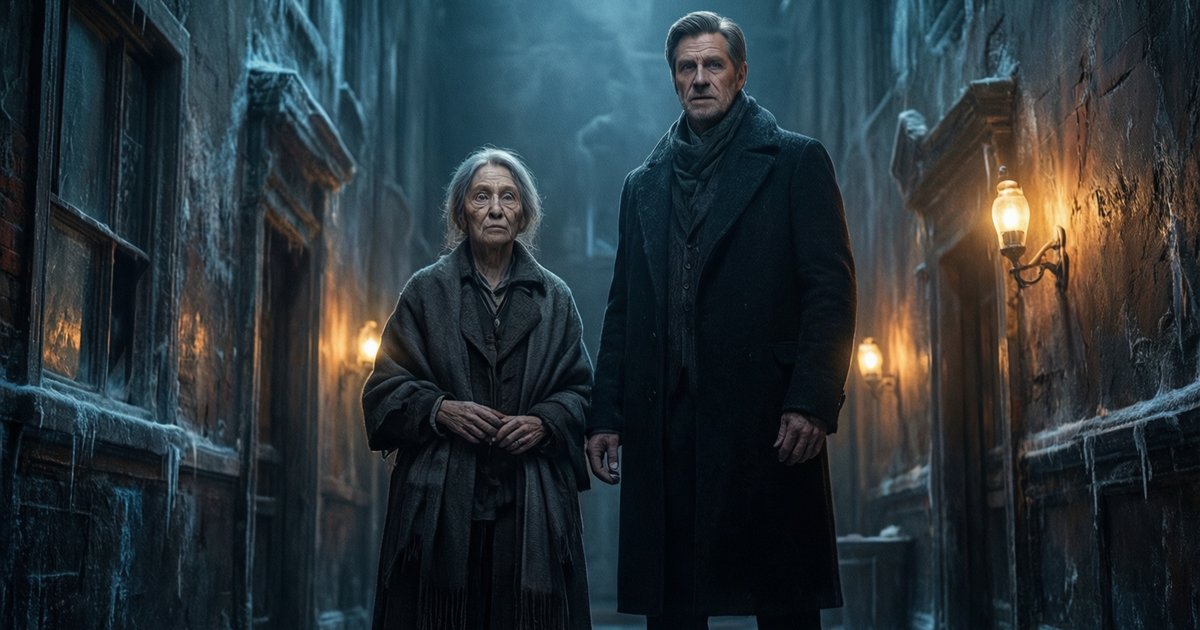
My Landlord Tried to Evict Me in a Freeze. He Didn't Know I Bought the Block.
Fiction. This is an original, made-up story: names, characters and events are invented, and any resemblance to real people or events is coincidental.
Part 1 of 5 · Chapters 1–2 of 10
Listen to Part 1 · 5 min
Chapter 1
"GET OUT OF MY SIGHT AND OUT OF THIS BUILDING!"
Mr. Sterling’s face was a shade of purple I hadn't seen since a bad beet salad in 1984. He was towering over me, his breath smelling of expensive espresso and arrogance.
I didn't flinch. I didn't scream back. I simply stood there in my living room, the air so cold I could see my own breath frosting in the air, clutching a manila folder to my chest.
He thought he had won. He thought I was just another fragile old woman who had run out of options. He was wrong.
But to understand why, you need to know how it all began. Three weeks earlier, the temperature in Boston plummeted to a brutal 8°F, and my radiator went silent.
It started as a faint clicking sound, like a dying clock. Then, the pipes grew cold to the touch. By Tuesday, the interior of my apartment felt less like a home and more like a walk-in freezer.
I reached for the phone, my fingers stiff. I called the management office. No answer. I called again. Voicemail.
I looked around my small, historic brownstone unit. I loved the crown molding and the wide windows, but they were useless against a New England January. I wrapped my father's old vintage wool shawl tighter around my shoulders. It was heavy, charcoal gray, and smelled faintly of cedar and old libraries.
My father had been a carpenter who built half the houses in this neighborhood. He always told me, "Bonnie, the only way to truly be safe is to own the ground you stand on."
I had spent forty years as a corporate archivist, the woman who organized the files and kept the secrets. I was the invisible gear in the machine, the person people forgot to invite to lunch but relied on to find every missing contract from 1972. I had learned the art of being unseen.
I didn't mind the invisibility. It allowed me to observe. And as I watched the frost creep across my windowpane, I realized Mr. Sterling wasn't just negligent. He was predatory.
Chapter 2
I caught Mr. Sterling in the hallway on Thursday. He was wearing a cashmere overcoat that probably cost more than my first car. He was walking briskly toward the elevator, his phone pressed to his ear.
"Mr. Sterling!" I called out, my voice raspy from the cold.
He stopped, looking at me as if I were a smudge of dirt on his polished Italian loafers. He didn't lower the phone, just signaled for me to speak with a flick of his wrist.
"The heat is completely out in 4B," I said, trying to keep my tone steady. "It's twenty degrees in my bedroom. I've left three messages."
Sterling sighed, a long, dramatic sound of boredom. He finally lowered the phone, but his eyes remained cold.
"Mrs. Pennington, let's be realistic. These buildings are old. They have quirks," he replied.
"A quirk is a squeaky floorboard, Mr. Sterling. Frozen pipes are a liability," I countered.
He let out a short, mocking laugh. "You're complaining about a little breeze? Most people would be grateful to live in a historic district. Maybe you're just getting too old for the climate. Buy a space heater. Stop bothering me with trivialities."
He stepped into the elevator and the doors slid shut, cutting off the sight of his smirk.
I stood in the hallway, the silence echoing around me. I wasn't just cold; I was vibrating with a quiet, controlled anger. For years, I had let people talk over me in boardrooms. I had let managers take credit for my filing systems.
I walked back into my apartment and opened a sturdy archivist's box under my desk. Inside were not just memories, but records. I pulled out a stack of certified mail receipts.
Every single request for repair had been sent via certified mail. Every single one had been signed for by his office and ignored.
I carefully filed the latest receipt. I knew how to build a paper trail. In my world, a paper trail was a map to a person's downfall.
Coming up in Part 2“A soft knock sounded at my door on Friday evening. I opened it to find Marcus, the twenty-four-year-old artist from…”