 Porchlight Tales
The Unsent Letter in the Sewing Machine
Fiction. This is an original, made-up story: names, characters and events are invented, and any resemblance to real people or events is coincidental.
Part 1 of 5 · Chapters 1–2 of 9
Listen to Part 1 · 4 min
Chapter 1
"JUST SELL THE HOUSE, MOM!"
Caleb's voice boomed through the hallway, vibrating the crystal vases that had sat untouched for twenty years. He stood there in his expensive suit, looking at the dust motes dancing in the Georgia heat, his face tight with pragmatic impatience.
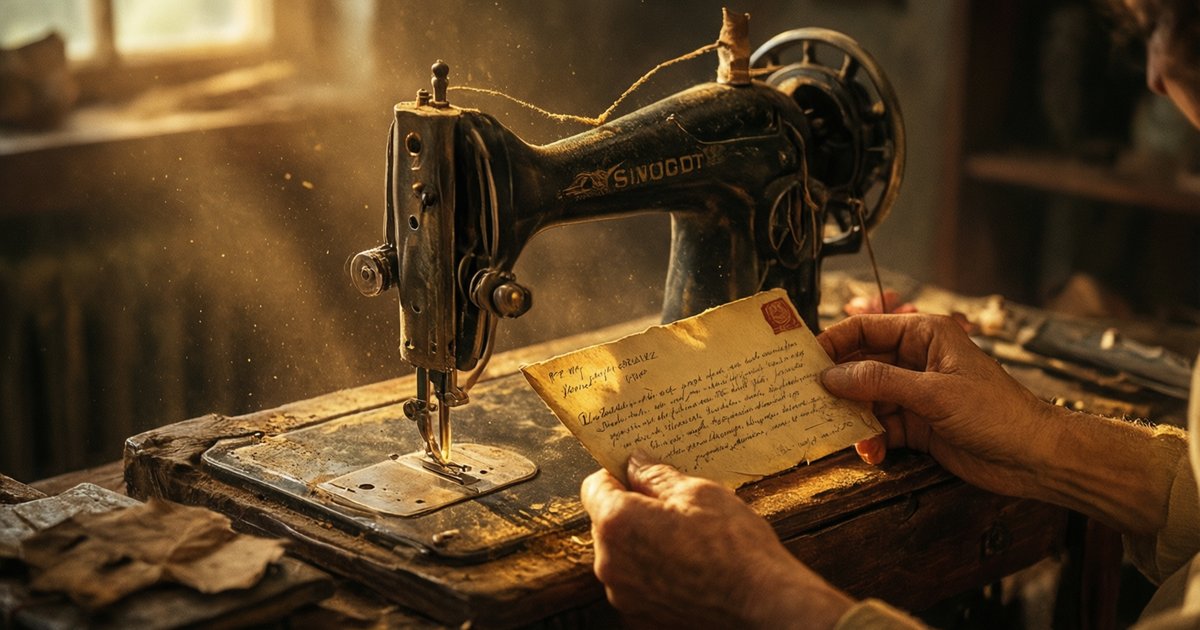
I didn't shout back. I never did. I just gripped the edge of the old Singer sewing machine, my fingers digging into the cold metal. As I shifted the heavy iron base, a sliver of yellowed paper fluttered out from a hidden seam in the fabric cover.
An envelope. Handwritten. Dated August 12, 1974.
I stared at the name on the front: Lydia. I had no sister. I was an only child, the sole recipient of my mother's exacting standards and cold, polished love.
Caleb sighed, checking his watch. "Are you even listening? The buyers are coming on Monday. We need this place empty."
I didn't answer. I couldn't. The air in the room suddenly felt too thick to breathe, heavy with the scent of machine oil and old secrets.
But to understand why a single piece of paper could stop my heart, you need to know how it all began. Three weeks earlier, when the silence of the house first became unbearable.
Chapter 2
The attic of my mother's ranch-style home carried the sharp tang of cedar, mothballs, and the suffocating weight of expectation. Estelle Haskins didn't do 'clutter.' Every box was labeled in precise calligraphy; every heirloom was wrapped in acid-free tissue.
I spent my days moving through the dust, feeling like a ghost in my own childhood. I was sixty-six, a retired librarian, yet in this house, I felt like the ten-year-old girl who had once been scolded for smudging a fingerprint on the mahogany dining table.
Estelle had been the pillar of our suburb—the woman who organized the church fundraisers and never had a hair out of place. She was a woman of absolute moral purity. Or so she wanted the world to believe.
As I sorted through a crate of her old linens, I found the blue jewelry box. It was a small, velvet-lined thing with a heavy brass lock. I remembered her voice, sharp and thin: "June, this stays locked until the day I am gone. Not a moment sooner."
I turned the key. My heart hammered against my ribs, expecting diamonds or perhaps a hidden diary.
It was empty.
Except for a single, small silver key taped to the bottom. No note. No explanation. Just a piece of metal that promised a door I wasn't sure I wanted to open.
I set the key on the dresser and looked at the calendar. August. The humidity was stifling, the kind of heat that makes everything feel slow and heavy. I thought about the 'Summer of '74.' Mother always called it her 'spiritual retreat' in Maine. She had vanished for three months, returning with a new, stricter devotion to the church and a gaze that seemed to look right through me. I had always accepted it. In the Haskins house, we didn't ask questions; we obeyed.
Coming up in Part 2“The garage sale was supposed to be a cathartic exercise. I spent the weekend dragging out things that didn't fit…”