 Porchlight Tales
What If the Transcontinental Railroad Had Been Completed in 1859?
Speculative fiction · Alternate history. Characters, documents and events in this story are imagined; real people, places and institutions appear only as historical backdrop.
Part 1 of 3 · Chapters 1–2 of 6
Listen to Part 1 · 3 min
Chapter 1
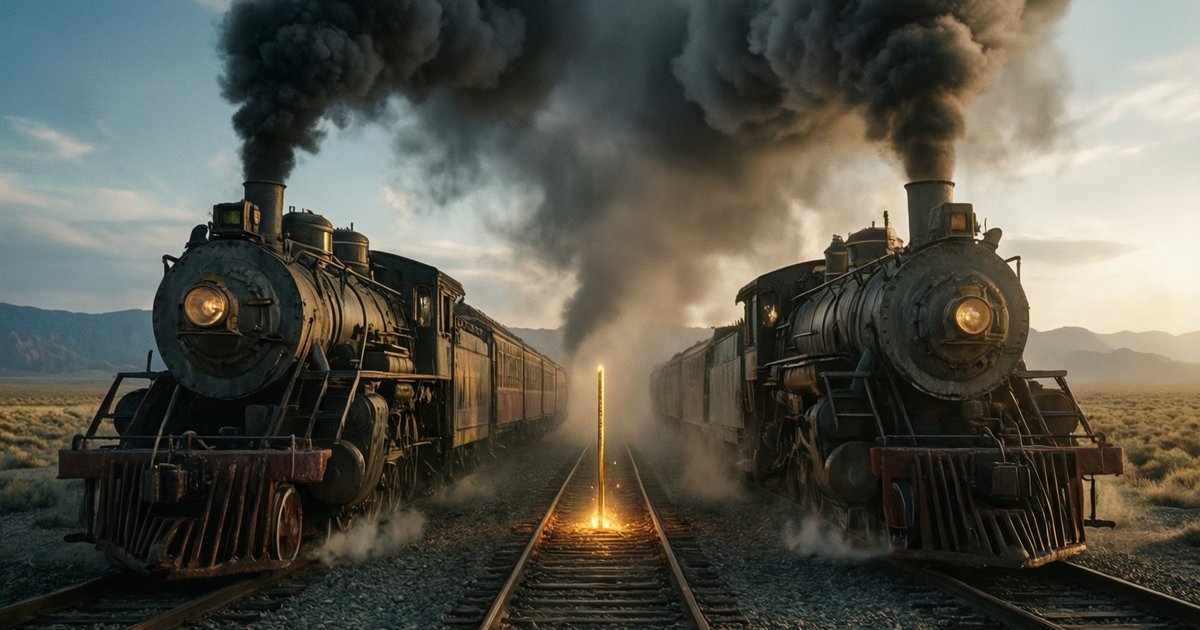
Imagine the sound of a single hammer blow echoing across the salt flats of Utah in May 1859. In our timeline, the Golden Spike wasn't driven until 1869, but here, a frantic surge of federal subsidies and an unprecedented labor boom pushed the rails together ten years early. I can still see the archival sketches: locomotives from the Union Pacific and Central Pacific facing each other, belching thick, black coal smoke into a pale blue western sky. The air smelled of hot iron and alkaline dust. For a brief moment, the nation exhaled in triumph, believing that a physical bond of steel could weld together a country that was socially and politically tearing itself apart at the seams.
But as the champagne flowed, a silent tension remained. The rails didn't just transport passengers; they transported ideologies. The question was no longer if the West could be reached, but who would own the dirt the tracks rested upon.
Chapter 2
The immediate domino effect was an economic explosion that outpaced the law. With the journey from New York to San Francisco slashed from six months to six days, the 'Rush to the West' became a torrent. Towns didn't grow; they erupted. I've read the diaries of settlers who arrived in 1860 to find cities of 50,000 people appearing where there had been only sagebrush a year prior. This rapid urbanization created a vacuum of governance. The federal government in Washington D.C. was too paralyzed by the slavery debate to establish formal territories.
Consequently, the railroad companies became the de facto sovereign powers. The 'Railroad Baronies' emerged, exercising judicial and executive control over thousands of miles of track. They built their own police forces and minted their own scrip, creating a corporate feudalism that mirrored the very plantations the North despised. As the wealth of California gold flooded east via rail, the economic center of gravity shifted, but the moral divide only deepened. Who would control these new, wealthy territories?
Coming up in Part 2“By 1861, the tipping point arrived. In our history, the Civil War was largely a conflict over the future of…”