 Porchlight Tales
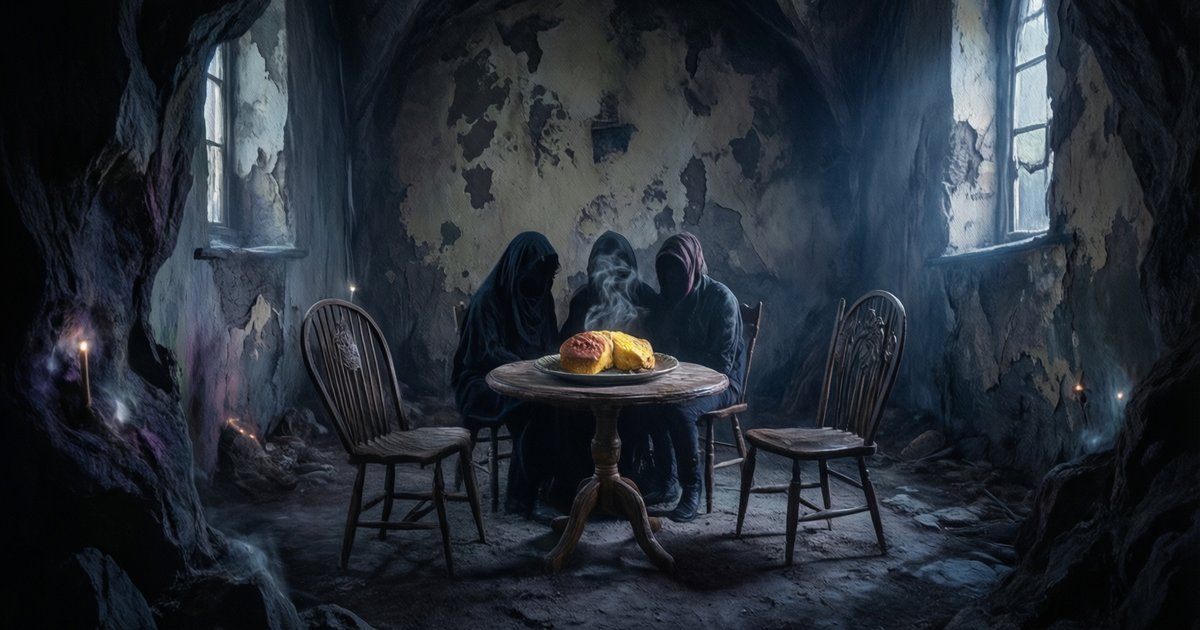
The Empty Fourth Chair of Cedar Hollow
Fiction. This is an original, made-up story: names, characters and events are invented, and any resemblance to real people or events is coincidental.
Part 1 of 5 · Chapters 1–2 of 10
Listen to Part 1 · 5 min
Chapter 1
Cedar Hollow, Georgia, felt like damp pine needles and the sharp tang of old floor wax. I arrived in October, my suitcase heavy with a level of desperation I couldn't admit to anyone. At thirty-four, I was a freelance archivist whose academic reputation had vanished overnight after a failed project in Boston. I needed this contract at St. Jude’s community hall to prove I wasn't the fraud my peers believed I was.
Sunday potlucks were the heartbeat of the town. The community hall was a cavernous room with peeling cream paint and heavy oak beams. As I settled into my seat, I noticed it: a small, circular table set for four, but only three people sat there. The fourth chair remained empty, tucked neatly against the tablecloth.
I checked my watch—12:15 PM. My thumb brushed the leather strap, a nervous habit that had plagued me since my university days. Just as the prayer ended, a plate appeared before the empty chair. It wasn't there a second ago. It was a thick slice of honey-butter corn bread, steaming hot, the aroma of caramelized sugar and salt cutting through the heavy humidity of the room.
I looked around. No one had walked past the table. The parishioners continued their conversations, their laughter echoing against the high ceiling, completely ignoring the steaming plate. To them, the empty chair wasn't a void; it was an invitation. I felt a prickle of curiosity that outweighed my usual anxiety. Who was this guest, and why did the town treat their absence as a presence?
I leaned in to get a better look at the corn bread. The steam rose in a delicate curl, reminding me of a kitchen I had never visited but felt I should know. As I glanced back at the clock, I realized that for the first time in years, I wasn't thinking about my failures. I was thinking about the ghost at the table.
Chapter 2
Monday morning found me in the dusty archives of St. Jude’s, surrounded by crumbling ledgers and the musk of mildew. I sought out Rosemary Sterling, the church’s matriarch. She was a woman of iron poise, wearing floral dresses that looked like they belonged in a 1950s catalog, her hair a rigid silver wave.
"Mrs. Sterling, I noticed the fourth chair at the potluck," I said, trying to keep my voice neutral. "It's a fascinating tradition. Who is it for?"
Rosemary didn't stop polishing the silver tea set. Her eyes, a sharp, piercing blue, flicked toward me for only a second. "It's just community spirit, Mr. Ruckert. We leave room for the unexpected. Cedar Hollow is a town of hospitality. Now, please, focus on the 1920s baptismal records. We aren't paying you to be a sociologist."
Her dismissal was cold, but her hands trembled slightly as she set the teapot down. I spent the rest of the afternoon cataloging, but the image of that steaming corn bread haunted me. I kept checking my watch, counting down the hours until I could retreat to my hotel room.
When I finally unlocked my hotel door at 6:00 PM, I stopped dead. The room was small, with a sharp chemical tang of lemon bleach and stale air. There, sitting precisely in the center of my bedside table, was a small porcelain plate. On it sat a slice of honey-butter corn bread, still warm to the touch.
I hadn't left the church archives since noon. My door had been locked from the inside. I didn't touch the food; instead, I stared at the golden crust, the butter glistening under the dim lamp. Someone had entered my room without a key, or perhaps someone didn't need one. The hospitality of Cedar Hollow was beginning to feel less like a welcome and more like a surveillance.
Coming up in Part 2“The next day, I encountered Douglas Garrison. He was a reclusive carpenter with skin like cured leather and hands scarred…”